

Delaware State Forest
Discover 80,000+ acres of trails, lakes, streams in Delaware State Forest’s vast wilderness.
We just completed an eight-part series on Exploring Sate Parks in the Poconos. This is Promised Land State Park, but it's actually inside the Delaware State Forest. We wanted to help you understand just how vast this forest is—spanning parts of Pike and Monroe counties and now featuring a brand-new Resource Management Center in 2025. There is so much to explore in the Delaware State Forest.
Starting at the Heart: The Resource Management Center
When you're ready to begin your adventure in the Delaware State Forest, the best place to start is the new Resource Management Center, built in 2025. Tim Dugan, the district forester, welcomed us to this beautiful new facility.
“Welcome to the Delaware Forest Resource Management Center,” Tim said. “We’re part of Pike and Monroe counties—85,000 acres of awesome state forest land to get out and experience. This is our new facility. It’s a green-certified building, just opened this summer. We still have some things coming, hopefully later this fall.”
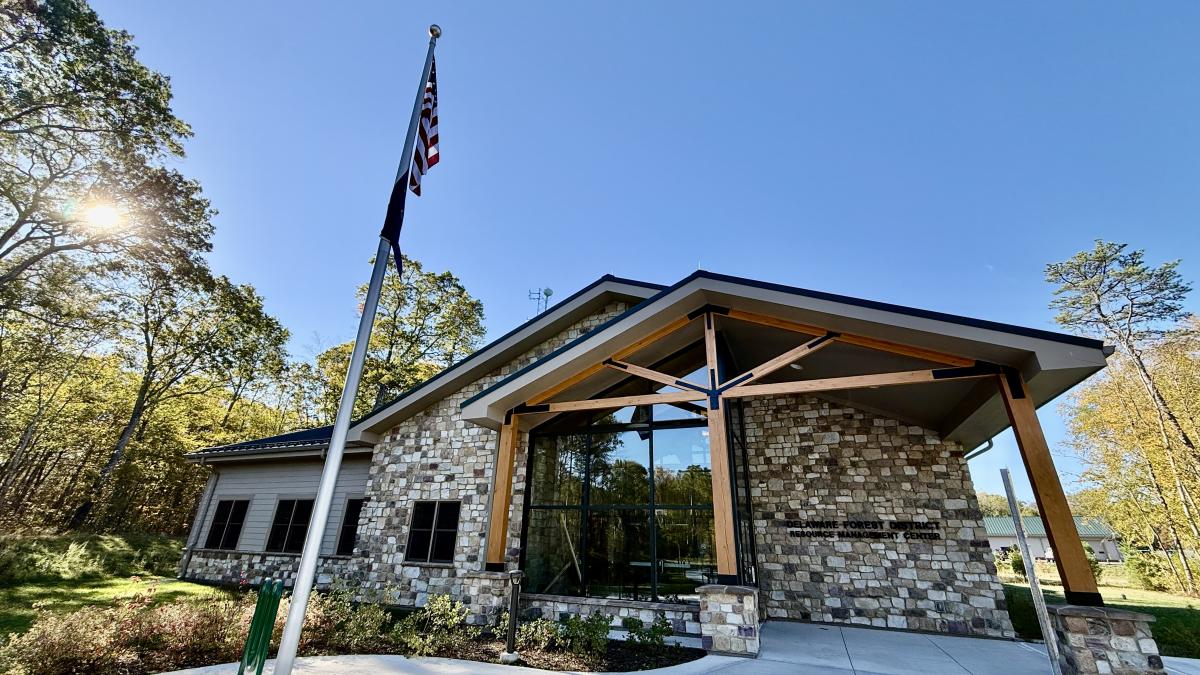
In addition to restrooms—which are key for visitors—the center houses the staff who help the forest thrive and remain accessible to the public.
“The forest district has been around for over 120 years,” Tim explained. “We have a lot of files, and we’re still moving in. Our timber forest management files, lease cabin files, roads, trails, buildings, bridges, dams—it’s all here. This is the core of our operations. DCNR Forest Rangers are based here too. They’re a law enforcement force for the forest. If someone has an emergency, they can call 911 and ask for a DCNR ranger.”
What’s Coming Next
This new facility will soon feature a mural, interactive exhibits for kids, and plenty of ways to learn about the more than 83,000 acres of the Delaware State Forest—from Peck’s Pond to the Stairway Wild Area along the Upper Delaware River.
“A really cool thing, too,” Tim added, “If you’ve got an electric vehicle, you can plug it in and charge. And then we have a trail connection to the Thunder Swamp Trail right here from the parking lot. So check that out.”
Thunder Swamp Trail: A Gateway to Adventure
Just a stone’s throw down Route 402 from the Resource Management Center is the Thunder Swamp Trailhead. Tom Ludka, assistant manager of the forest, joined us there.
“We are at the Thunder Swamp Trailhead right off Route 402,” Tom said. “It’s a 28-mile backpacking loop. Part of it runs along Bushkill Creek, a beautiful spot. If we go north, we’ll reach Saw Creek, where we need to replace a bridge. Maintenance includes bridge work, clearing trees and leaves off trails—that kind of thing.”
The Delaware State Forest offers hiking trails, campsites, horseback riding, ATV and snowmobile routes, fishing, and cross-country skiing—all thanks to the dedicated effort to keep this forest open and accessible.
“Everything’s marked and maintained,” I said. “It’s a labor of love.”
“Every one of our employees cares about a different segment of recreation,” Tom replied. “Whether it’s snowmobile trails, hiking, or waterways for fishing—everyone has their passion and focuses on making it better.”
And in the fall months, the forest is truly magical.
“The colors that burst through these leaves and canopies are something of nature’s wonder,” I said.
“Absolutely,” Tom agreed. “We’re at a good time of year. The colors are changing, different times for different species. It’s a magical time.”
Camp William Penn: A Hidden Gem
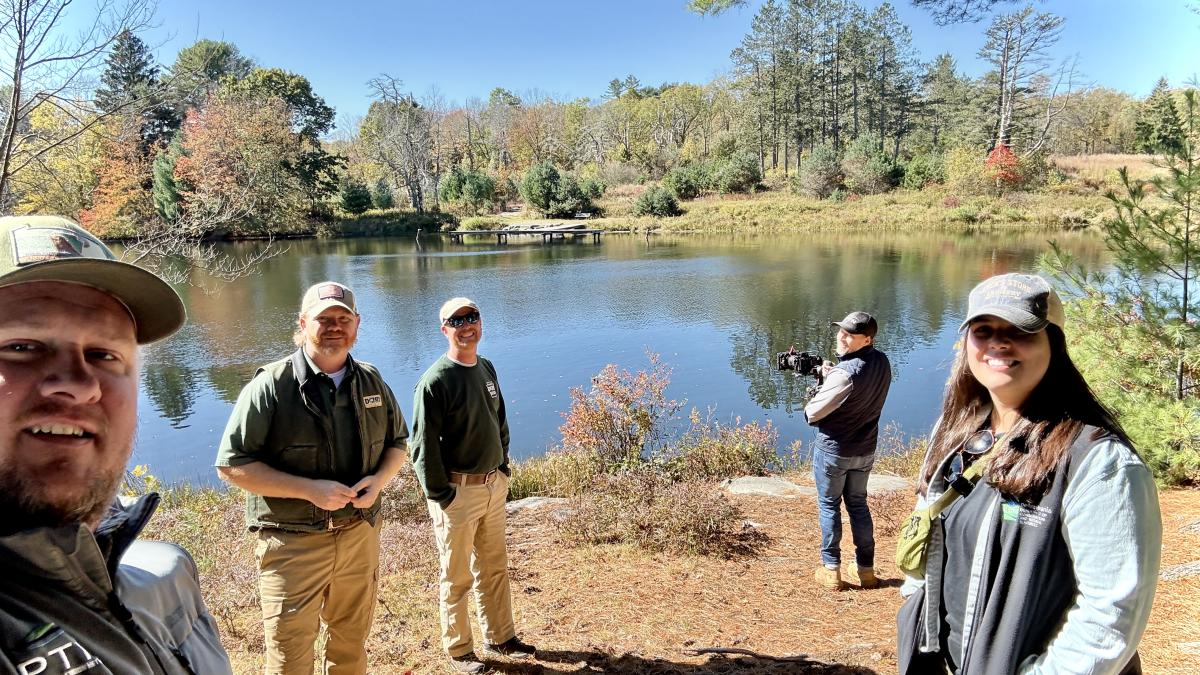
From one part of the forest to another, we followed the map to Camp William Penn—a former camp owned by the City of Philadelphia, now a nature area with a pond and majestic viewscapes.
“Just take a gander at this site here in October,” I said. “What a spectacular view with the sun glistening off the water and the trees changing in all directions.”
“This is a great spot,” Tim added. “We get a lot of day use here—people walking dogs, fishing. There’s still a remnant dock from the camp. You’ll see people out there just enjoying the day.”
High Knob Fire Tower: A View from Above
We wrapped up our journey at High Knob, where we met Bill Deaton at the historic fire tower.
“Thanks for joining us up here,” I said. “Especially on a gorgeous fall day like today where you can see for miles.”
“We are way high in the Pocono region,” Bill said. “This firetower is 103 years old. It was built when there weren’t trees around. It helps us manage forest fires, which are mostly human-caused. From up here, we can spot smoke all the way down to the Delaware Water Gap.”
“That’s amazing,” I said. “Let’s go on up and check it out.”
“Sure thing,” Bill replied.
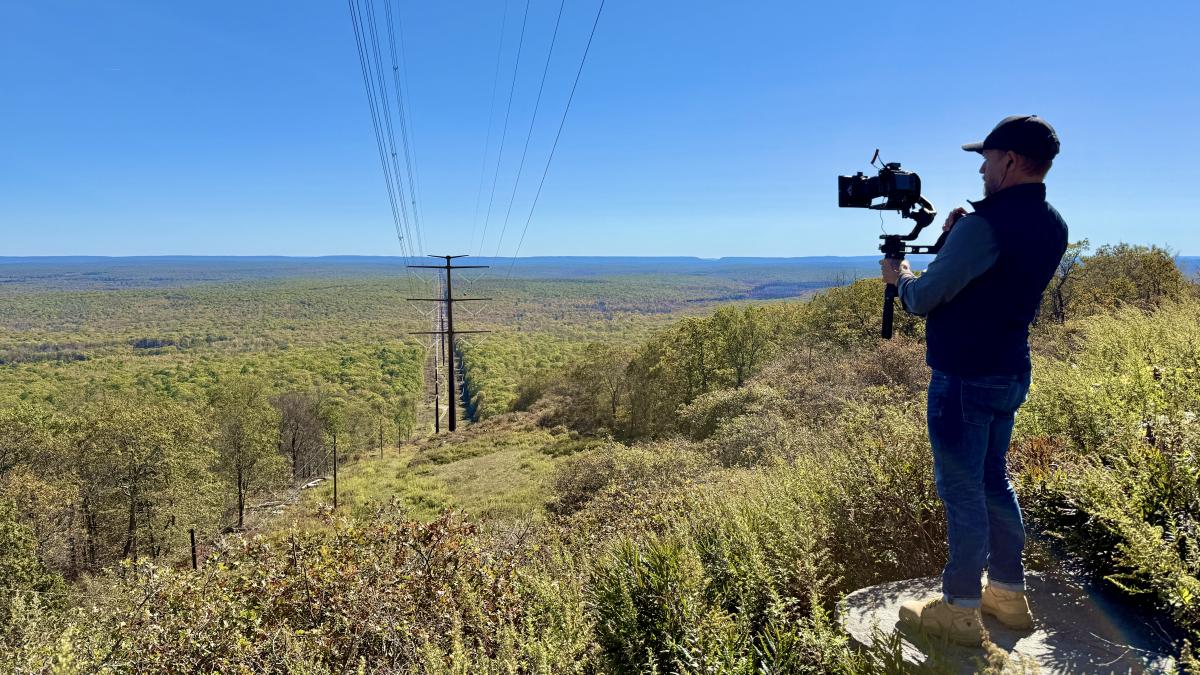
High Above the Forest: A View from High Knob
“This state forest is very vast,” I said. “But beautiful always.”
“Spring, summer—it doesn’t matter the season,” Bill Deaton replied. “It’s great to come up here on your workday. Now we’ve got fall color. In spring, you see the blossoms coming up. In summer, while doing maintenance, you’ll see birds flying around. We even get eagles flying over Peck’s Pond sometimes. It’s great to be above the birds.”
“It is,” I agreed. “This is way up there. The rarefied air.”
Whether you're high above the forest, overlooking lakes and treetops, or down below among the trails and streams, there’s a lot happening in the Delaware State Forest. Decades of management have gone into protecting this land and keeping it healthy for future generations.
Forest Management: A Delicate Balance
“Tim, there is quite a bit that goes into managing the state forest,” I said. “And one of the things the public should really know about is that there are projects where trees are cut down—but it’s all for the betterment of the forest’s health.”
“Absolutely,” Tim Dugan responded. “A big part of our mission is to supply timber and wood products to industry. It’s a renewable resource, and we do it sustainably. The Commonwealth Forest is certified as a green-certified forest by a third party. Today, we’re at an active timber sale.”
“See the stumps right there?” I pointed out.
“Yep,” Tim said. “This is a forest management project. The loggers are here now, removing trees and turning them into wood products that people use in their homes and workplaces every day.”
A Forest That Regenerates
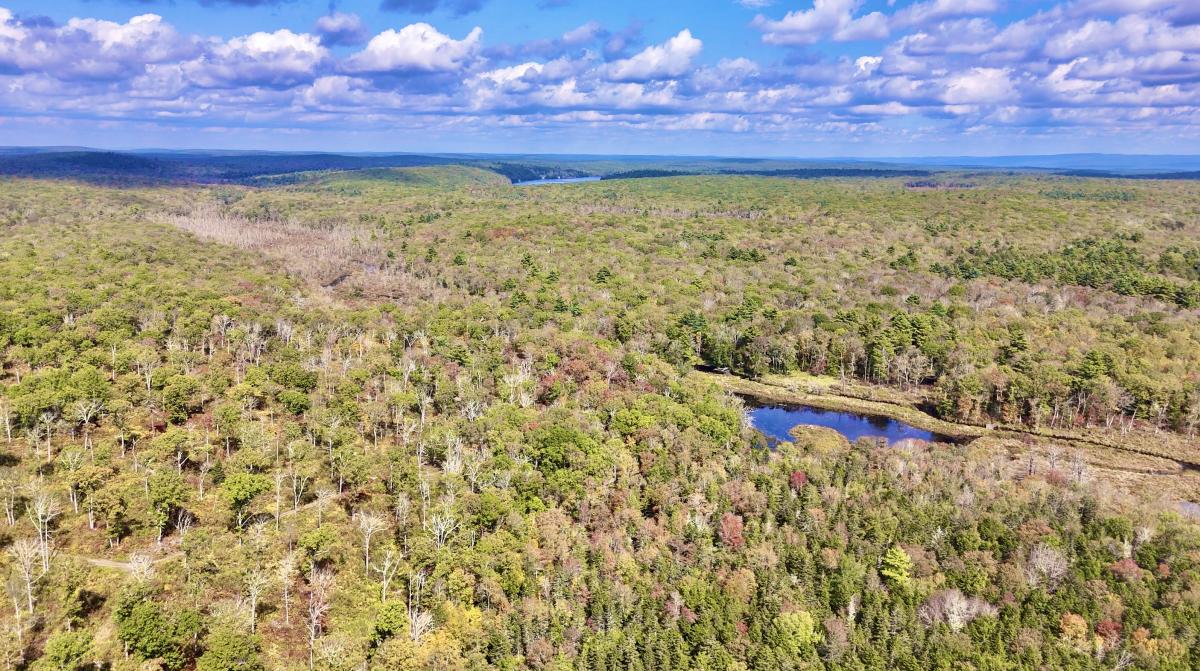
“Well, Tim, we just walked not very far from where the new cut is,” I said. “This is fourteen years past the last harvest. It seems healthy—like what it’s supposed to be.”
“Right,” Tim said. “This is a great showcase. This area was harvested about fourteen years ago, and the forest has grown back. It’s thick, it’s dense, and there’s a lot of diversity—many different species. It shows that good forest management happens here, and we’re proud of it.”
“So all those acres of land—every once in a while, one parcel is identified for something,” I added. “Whether it’s a prescribed burn or a timber harvest, it’s part of the forest’s cycle.”
“Exactly,” Tim said. “We also have a lot of reserve land—areas that won’t see active management like timber sales. We maintain a balanced matrix of treated and untouched acreage. Diversity is key. A healthy forest ecosystem provides great opportunities for recreation and supports the industry as well.”