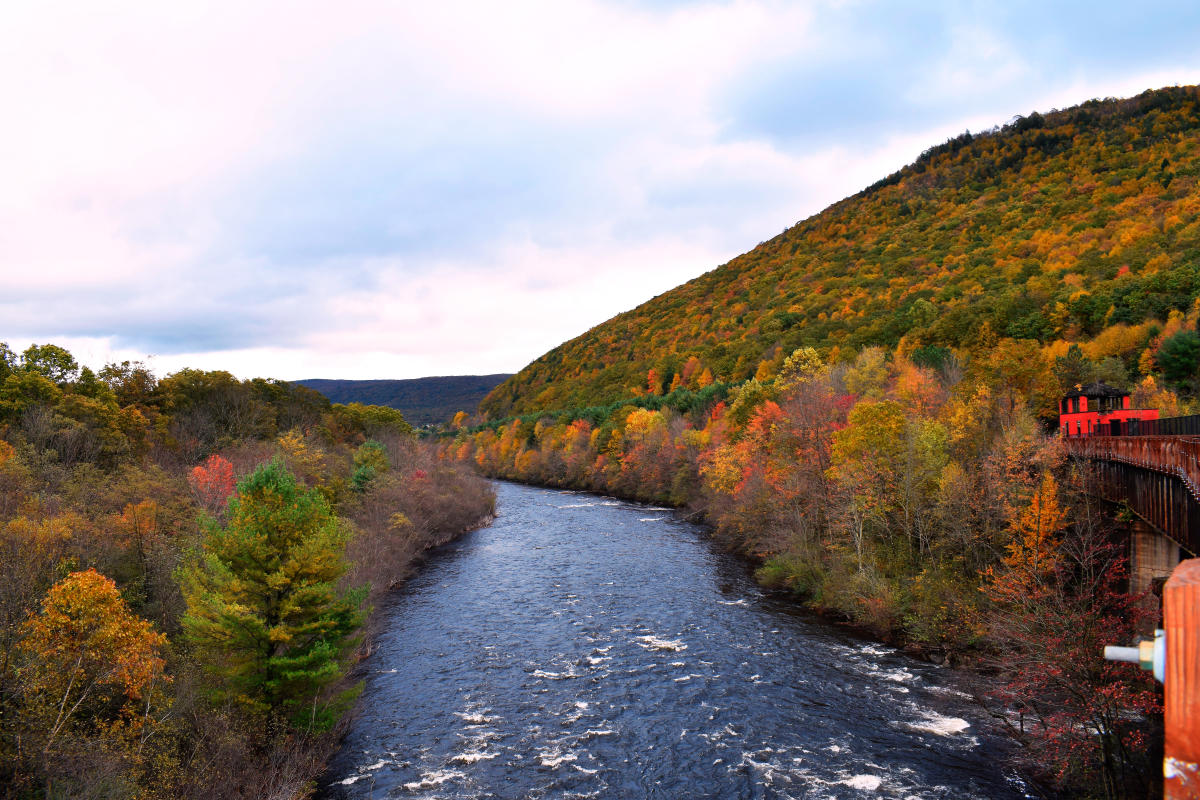
Lehigh Gorge State Park
Lehigh Gorge State Park boasts a river, a railroad, a rail trail and lots of history!
This is our eighth and final stop exploring state parks in the Poconos—Lehigh Gorge State Park. It's a stunning place to recreate, with the Lehigh River running through it, railroads and rail trails leading into beautiful downtown Jim Thorpe and beyond. Let’s explore this park and meet the people and places that make it so special. All along the Lehigh River, nature’s playground unfolds—a blend of history and the great outdoors. From the rails to the trails, stretching upriver to White Haven and into charming Jim Thorpe, Lehigh Gorge State Park is truly one-of-a-kind.
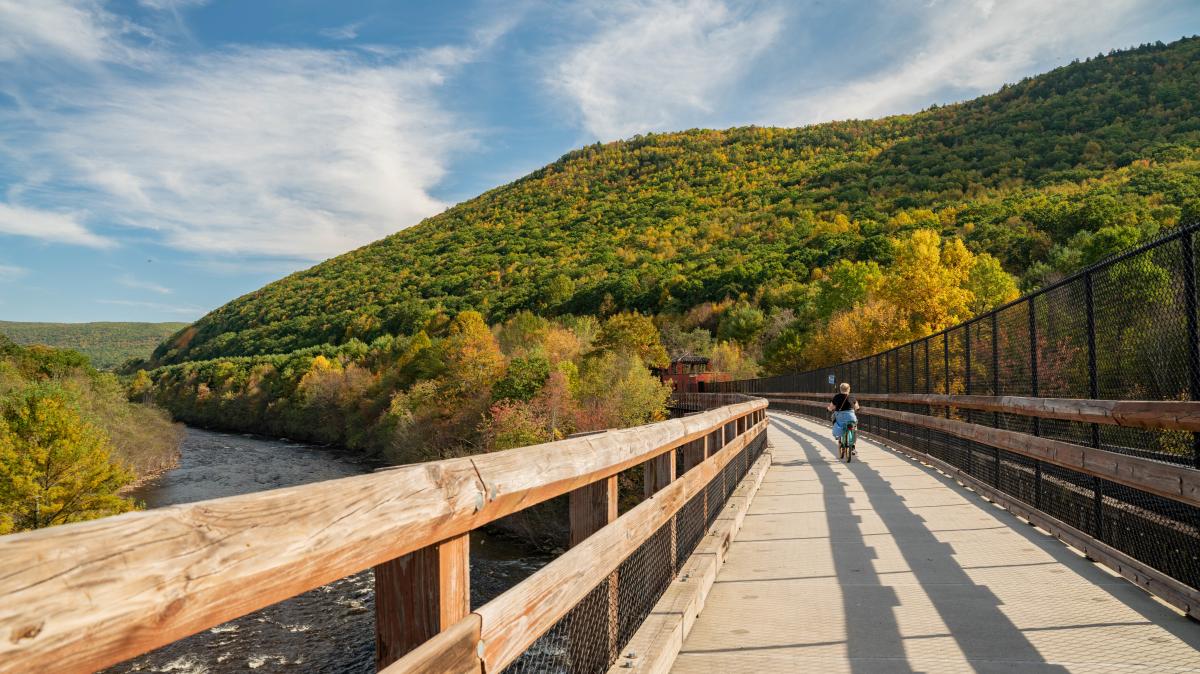
Whether you're paddling through whitewater rapids, hiking for a spectacular view, or pedaling along the D&L Trail, this park offers features few others do in the Poconos—or anywhere in Pennsylvania.
“During the summer we have some weekends where they release water from the Francis E. Walter Dam, which creates rapids for kayaking and rafting. It also helps the fishermen. We also have 26 miles of trail for hiking and biking," said Taylor Miller, Assistant Manager of Lehigh Gorge State Park.
A fan favorite stop along the D&L Trail is downtown Jim Thorpe.
The Lehigh Gorge Scenic Railway departs from the station in town, heading out along the gorge. Outfitters like Pocono Biking help visitors adventure along the many miles of trails.
“Jim Thorpe is the perfect outdoor recreation spot in the Poconos. It’s really the entryway to Lehigh Gorge State Park," said Sierra Fogal of Pocono Biking and Pocono Whitewater. "The trail comes right through town, and we have the Lehigh River. So we offer biking, hiking, whitewater rafting—everything you need for an awesome weekend or day outside.”
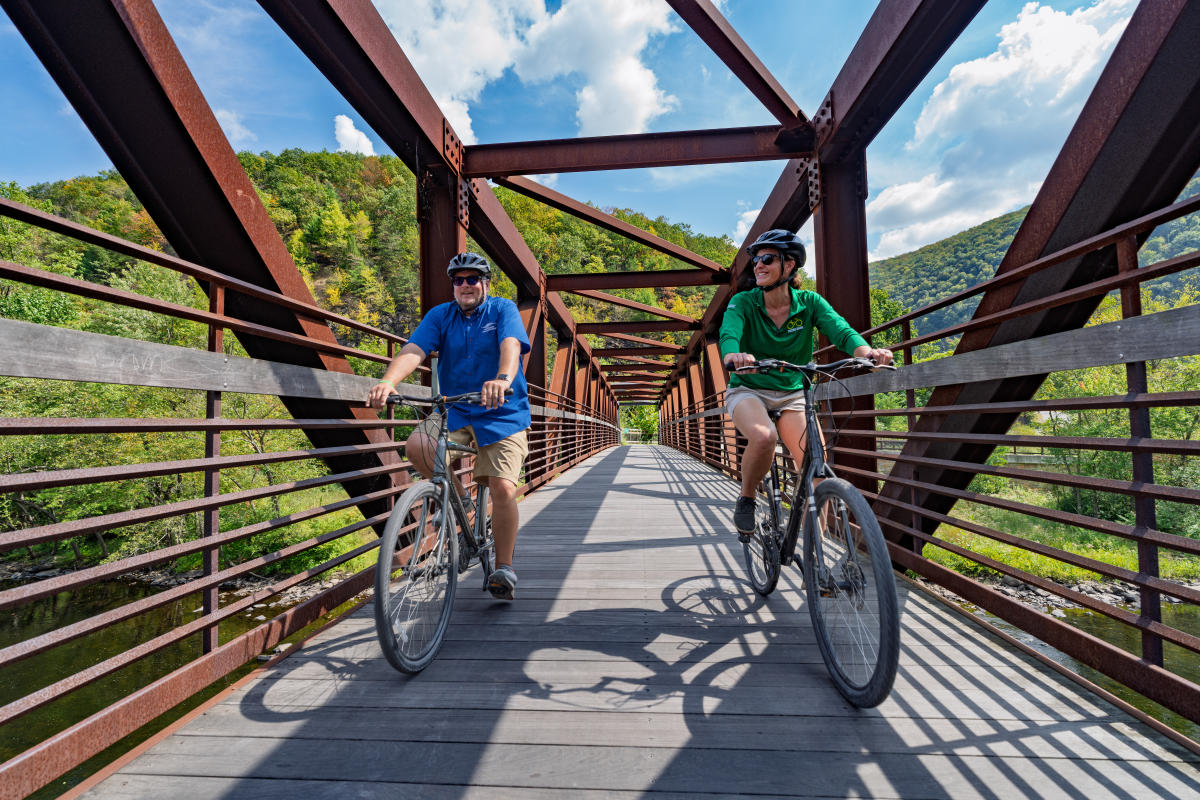
“We have four outfitters for rafting and five for bike rentals. Plus, people use the train bike that takes them up the Lehigh Gorge so they can ride back down," added Miller.
“That’s another piece of the history here. It’s amazing that a regional freight line invests so heavily in tourism and outdoor recreation," David Maher, Pennsylvania Heritage Areas Coordinator.
To understand the layers of history and significance in the Lehigh River corridor, we spoke with Maher, who oversees Pennsylvania’s Heritage Areas program.
“You really get the sense of layering—not just history, but cultural and natural resources," added Maher. "The river is our foundation, and now we’re up on this historic railroad bridge. The geologic and natural history all around us is iconic of this region.”
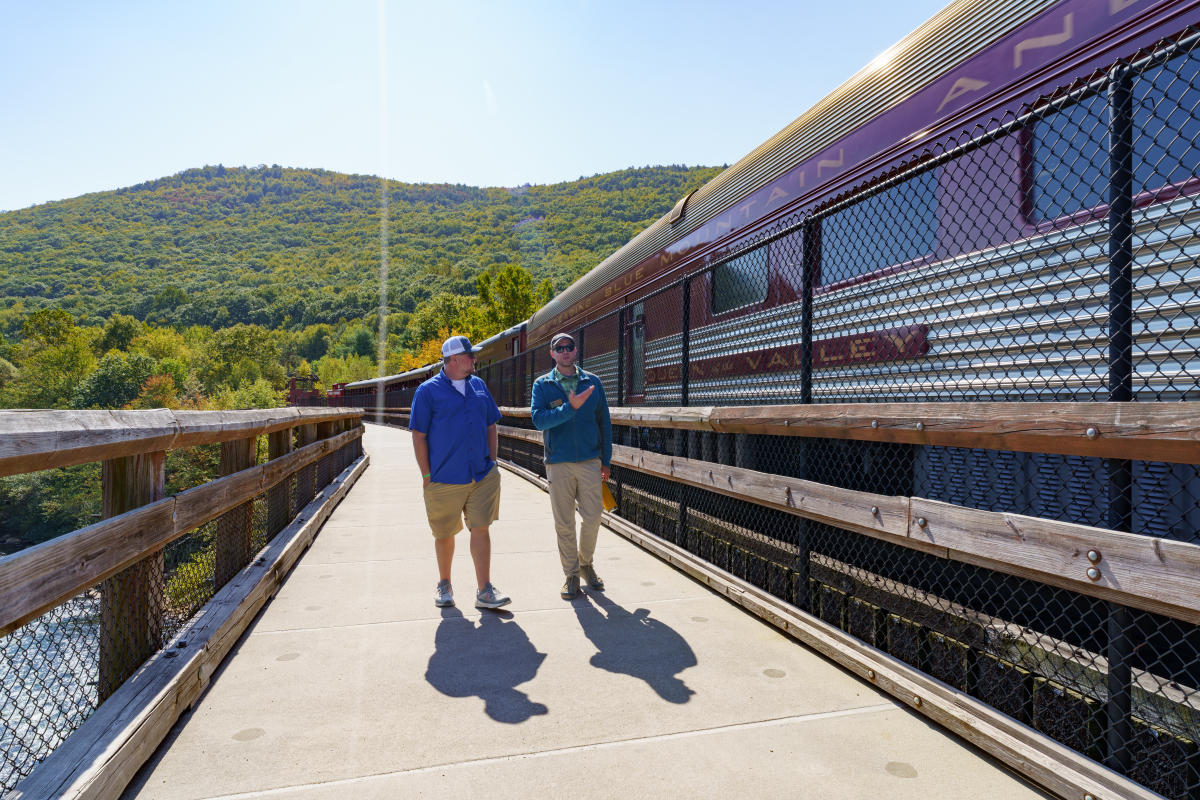
About 40 years ago, the Delaware and Lehigh National Heritage Corridor was designated—the first in Pennsylvania. It celebrates the railroad and canal history, the industries that built towns in Carbon County, and the forces that fueled the Industrial Revolution.
“There’s a history and heritage here that goes way back, including indigenous history. Villages once lined these rivers. That history is still present and alive, with town names like Mauch Chunk and Nesquehoning reflecting that legacy," he said.
“This is one part of our history that burned down in 1911. Hotel Wahnetah was built in 1886, located just across the river. It had a swinging bridge for access and rivaled Niagara Falls in terms of visitors," said Megan Fedor – Environmental Education Specialist.
“That’s impressive, especially considering the natural features here and the investment made in the hotel," said Jim.
“Exactly. Even President Grover Cleveland visited Hotel Wahnetah with his wife Frances in 1888," said Fedor.
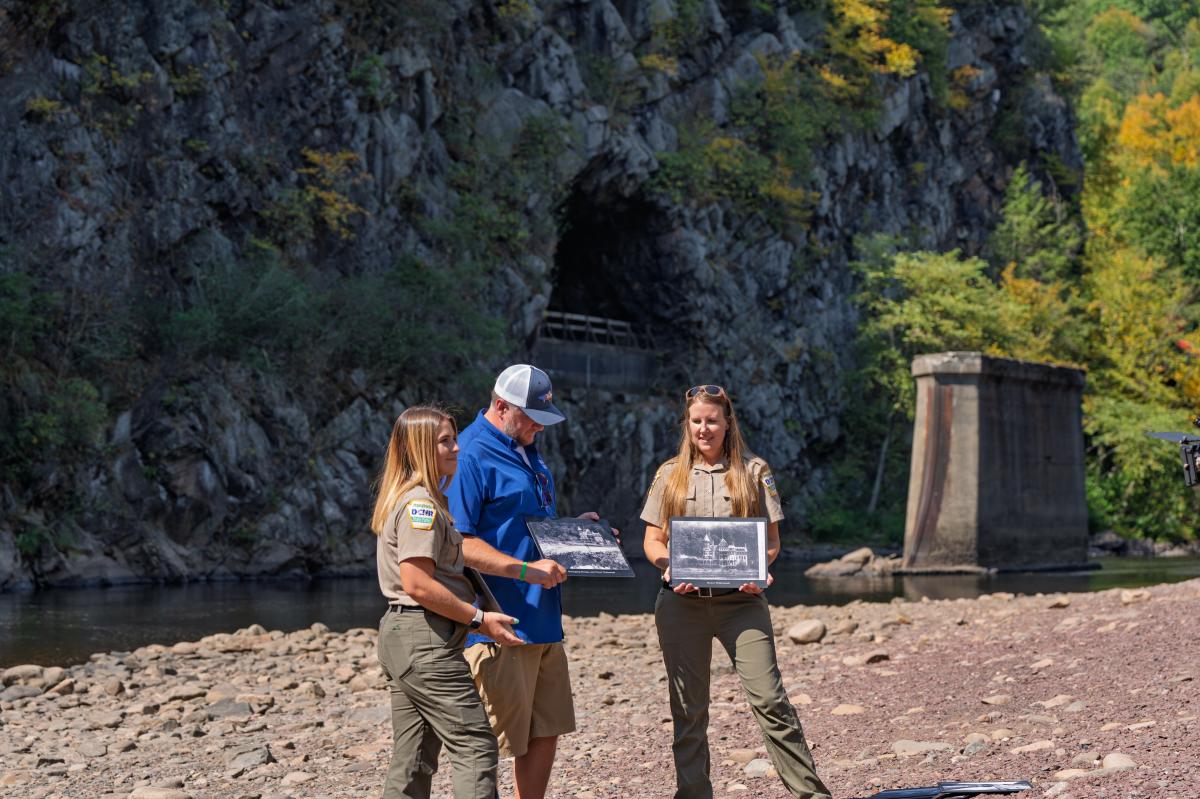
So much history lines the riverbanks of Lehigh Gorge. Fedor shares this history as the environmental education specialist for the park.
"Back then, we transported coal, barges, and people down the river, and eventually by railroads in the 1860s. Today, we transport hikers, bikers, and rafters who come to enjoy the natural beauty. I’m so glad Lehigh Gorge State Park exists to conserve our natural resources," added Fedor.
“Lehigh Gorge State Park is a great spot to experience history. It’s not accessible by car, so you explore by bike or raft," said Fogal. "Along the way, you’ll find locks and canals with interpretive panels that tell the story of what brought us here and why it’s such a cool place to visit.”
“It’s interesting to think about how little communities popped up to serve users of this corridor," added Maher. "They’re still doing that today—just for different types of users like outdoor recreation enthusiasts and tourists. It’s a constant evolution for communities in this region.”